Held by geometry, not by centers.
In centerless grinding the part rests on a work blade and is driven by a regulating wheel while the grinding wheel does the cutting. Because nothing clamps the part, there is no centering error to inherit and no loading time between pieces, which is why centerless remains the highest volume process in precision grinding.
Part height above the wheel centerline is the variable that governs everything. Set it wrong and roundness collapses, chatter appears, and no wheel specification will rescue the process. Blade angle, regulating wheel speed and the angle of inclination then set the traverse rate through the machine.
The grinding wheel and regulating wheel turn in the same direction where they meet the part, so their surfaces move opposite to each other at the contact point. That opposition is what makes the part rotate under control.
At a glance
Thru-feed and in-feed.
Thru-feed
The part travels continuously through the wheels and exits the far side. The regulating wheel is tilted so that its rotation pulls the part along as it turns. Traverse rate is set by the angle of inclination and regulating wheel rpm, not by wheel velocity.
Best for straight, unstepped parts run in volume: pins, dowels, rollers, bar stock.
In-feed (plunge)
The part stays in one position while the wheels close on it, so the wheel form is transferred directly to the part. Apart from the work blade replacing centers, the process behaves like plunge grinding between centers.
Best for stepped, shouldered or formed parts, and for multiple journals ground at once.
Built for the machine you run.
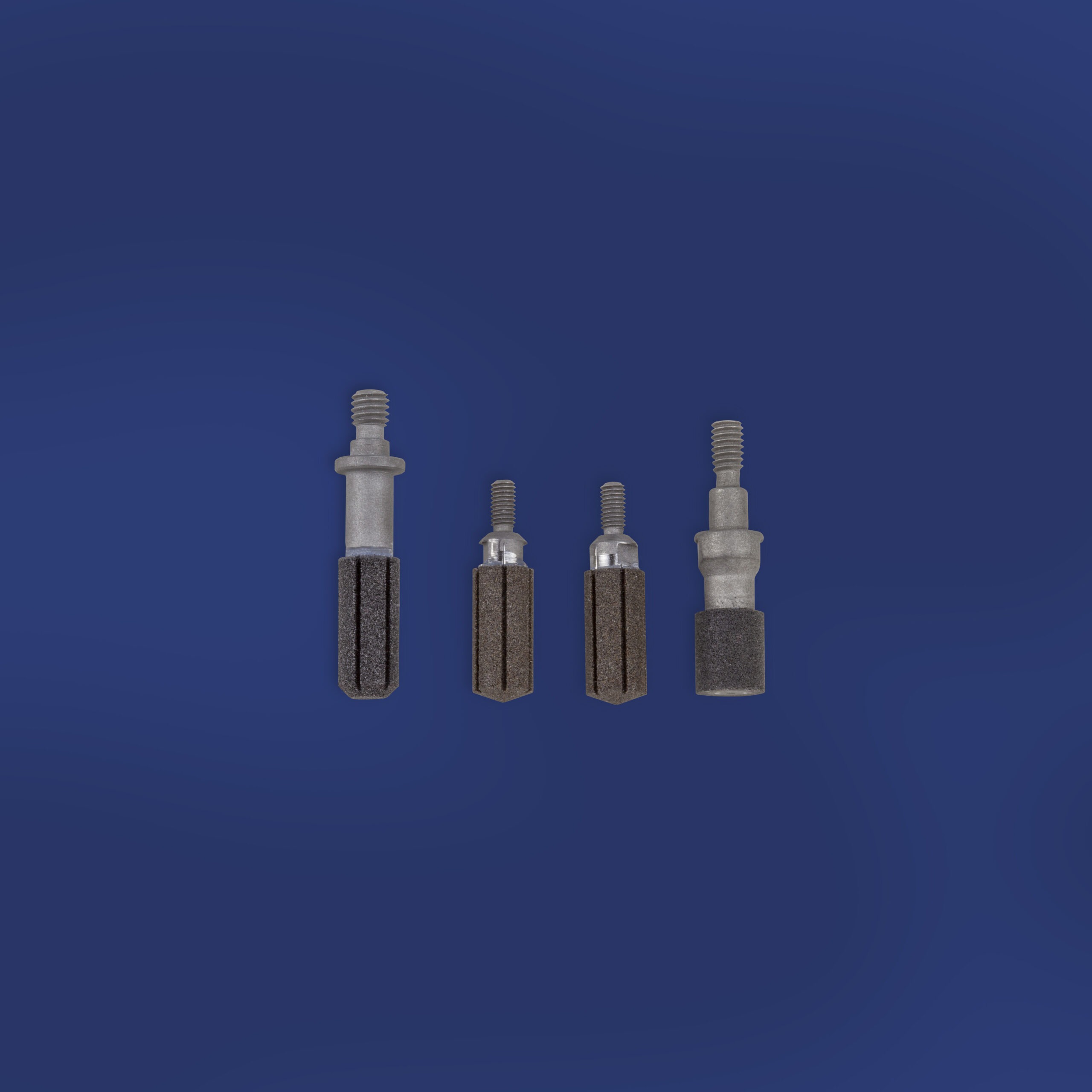
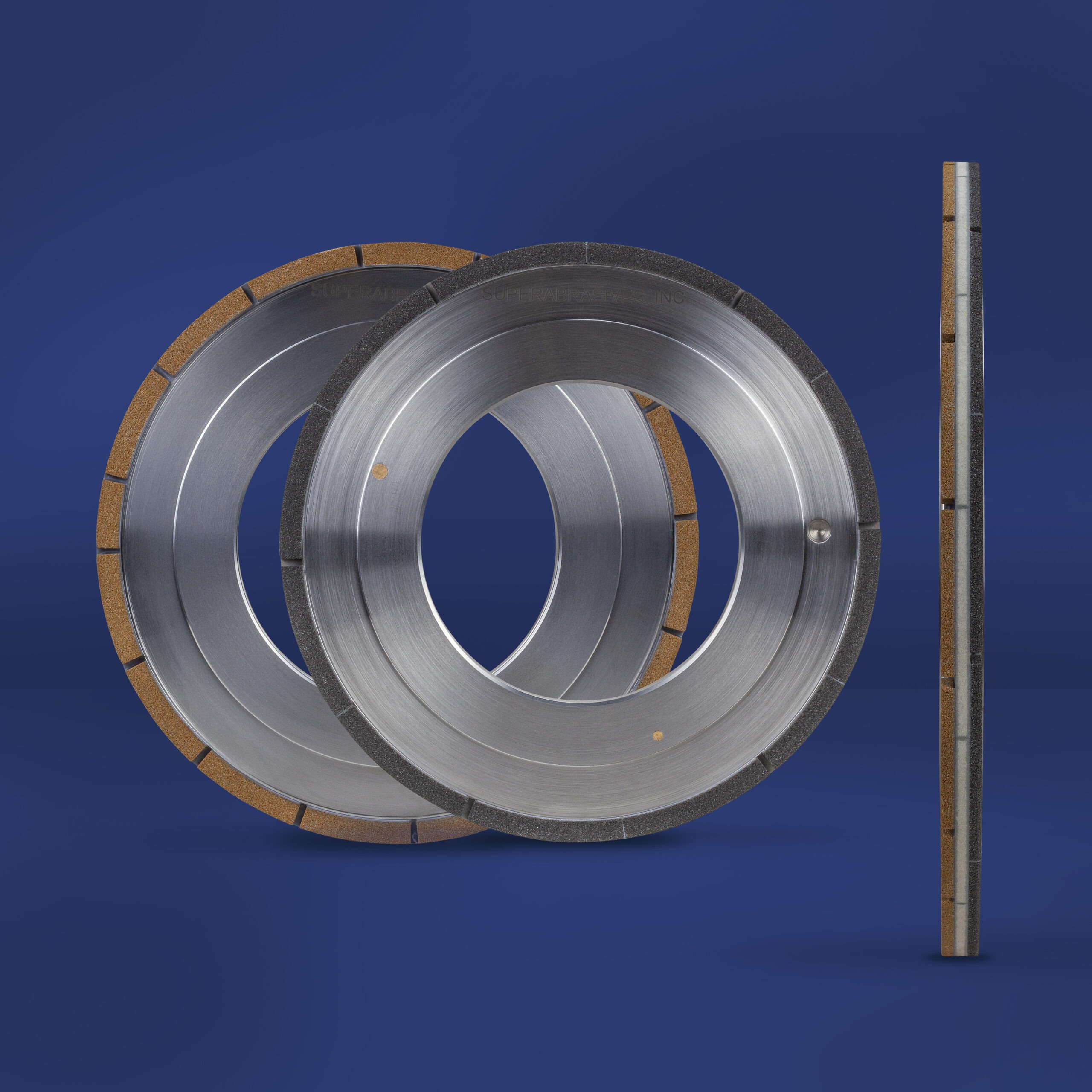
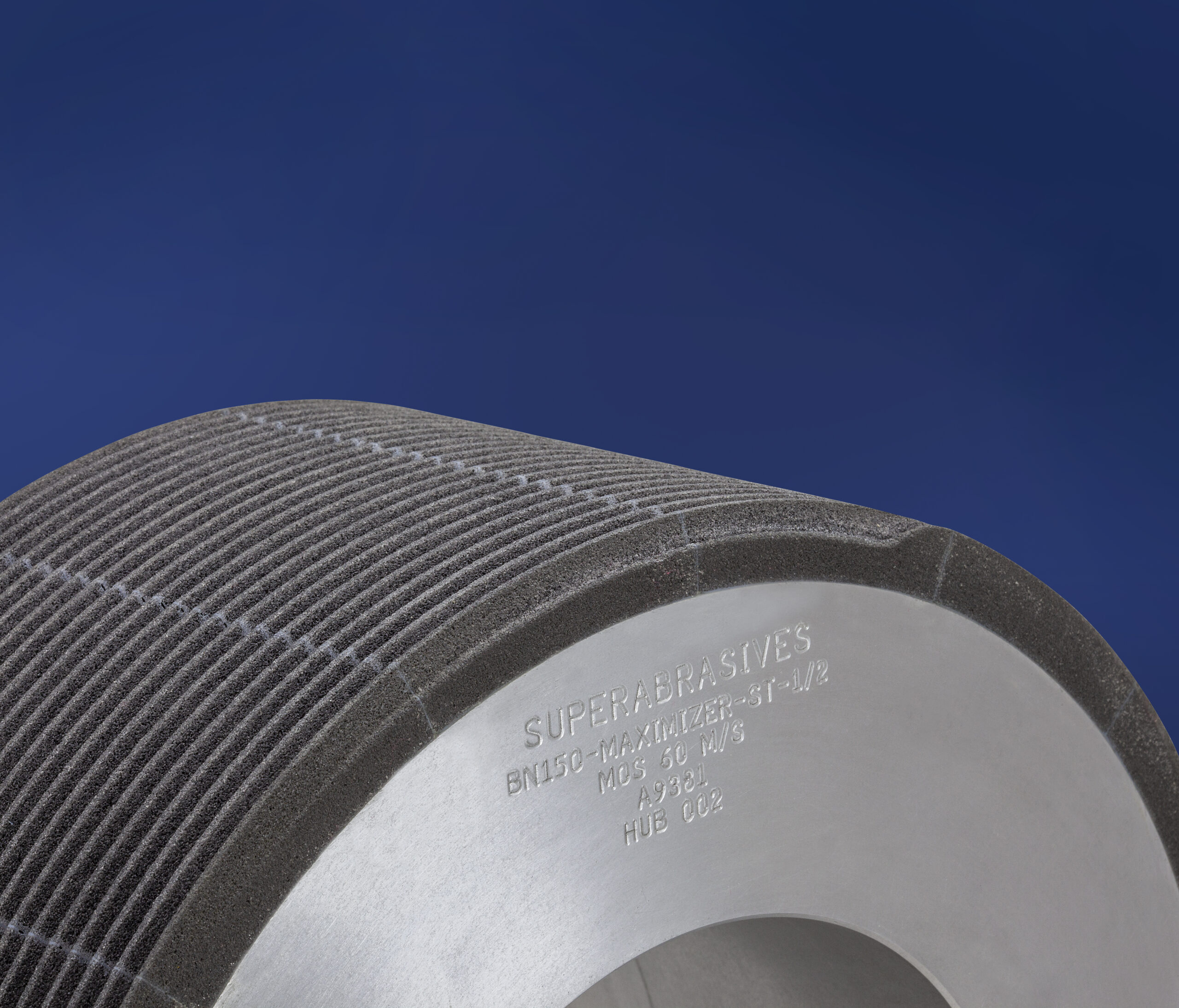
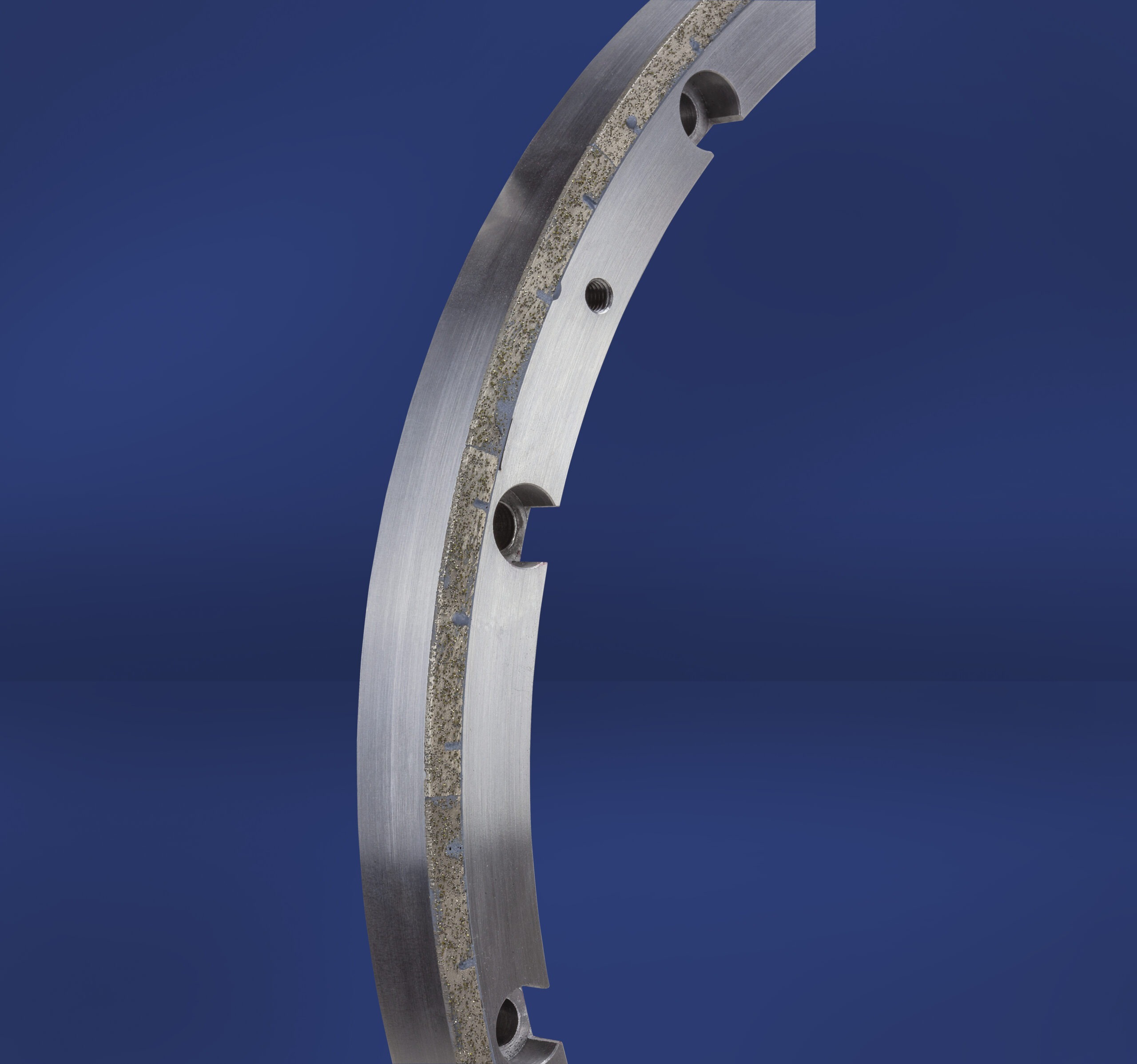
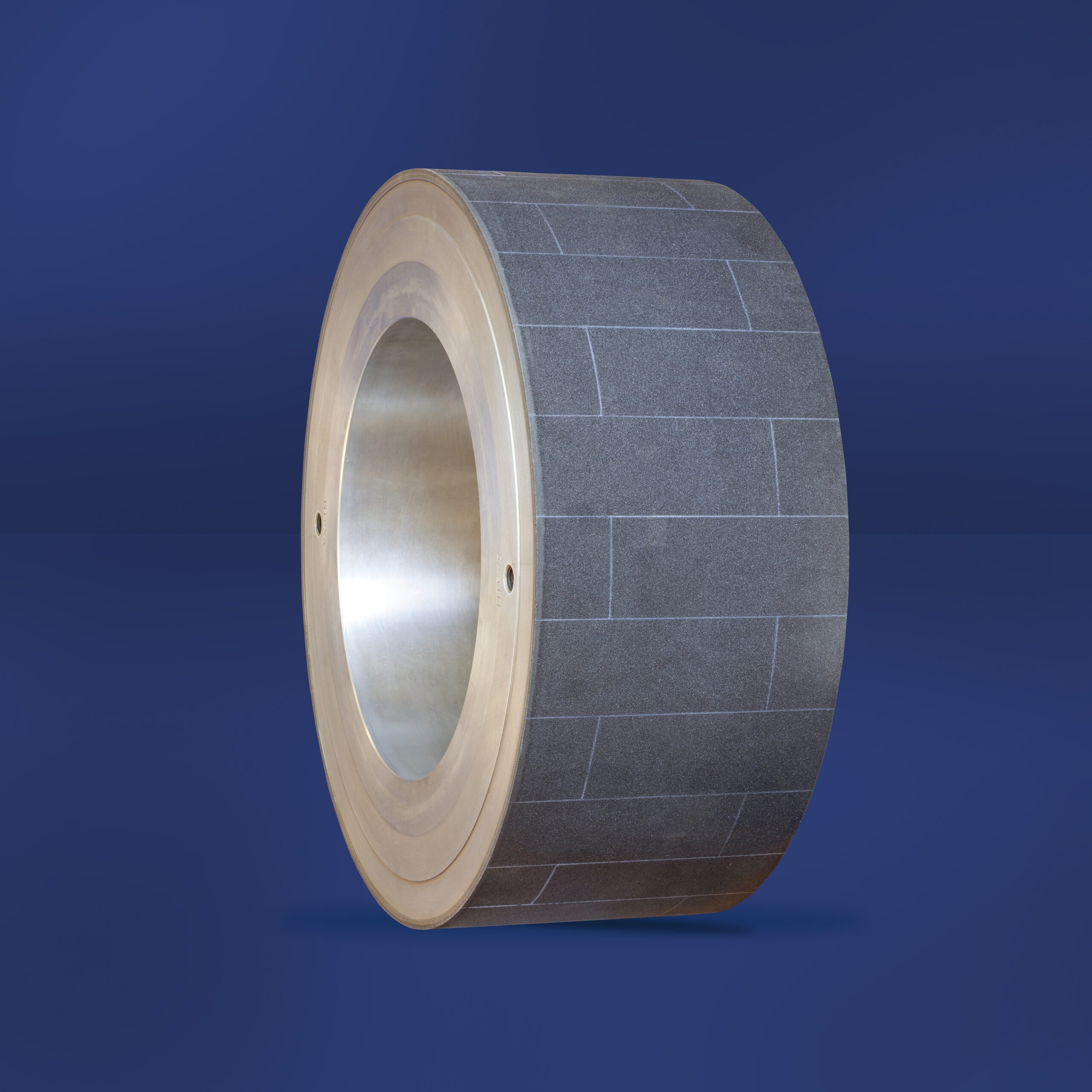
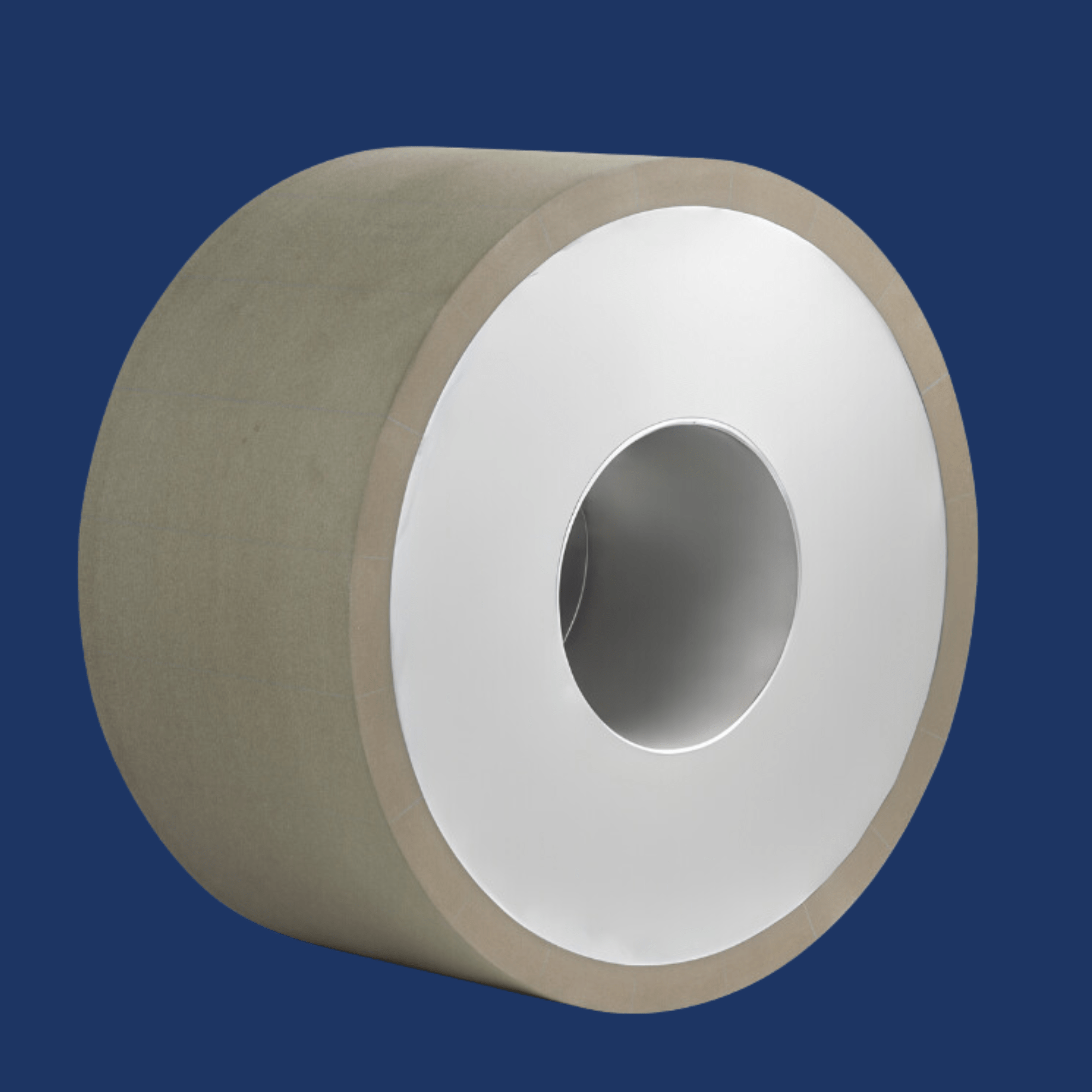
We manufacture centerless grinding wheels in vitrified, resin and Maximizer bond systems, in both diamond and CBN, including large diameter resin wheels for oil and gas work. Wheel width, bond hardness and structure are selected against your traverse rate and stock removal.
Troubleshooting Centerless Grinding.
When a process is not delivering the life, finish or cycle time it should, these are the areas our applications engineers work through with your team.
Part is out of round or lobed
Chatter marks around the circumference
Taper along the part length (thru-feed)
Burn or surface discolouration
What we will ask you.
A centerless specification is a function of your machine and your part, so these are the details that let us recommend rather than guess.
Grinding Basics training.
SuperAbrasives provides grinding training for customer engineering, quality and production teams, delivered on site at your facility or at our Wixom plant. Sessions are built around your processes and the parts your team runs day to day.
The curriculum is drawn from our Grinding Basics reference, which covers cylindrical, centerless, internal and surface grinding across 147 pages, including the calculations behind traverse rate, angle of inclination, part speed, Q-prime, coolant delivery and dressing overlap. Our applications engineers work through these methods with your team and apply them directly to your applications.